
Search engine optimization has evolved significantly over the years. Through all these changes, a key constant is that common SEO errors can affect your website’s visibility. Organic traffic, conversions, and so much more are all a part of SEO. If these SEO mistakes aren’t addressed in time, they’re likely to cause significant errors.
Around 53% of website traffic comes from organic searches. Despite AI-driven workflows, automations, and other tools, many businesses still struggle with SEO. With Google prioritizing experience, expertise, authority, and trustworthiness, SEO has come a long way. It’s all about establishing the reliability and relevance of your website in today’s world.
Why Do Many Websites Fail SEO?
SEO isn’t a one-time thing, but a continuous effort. Around 94% of pages have zero external backlinks. This is one of the worst aspects for businesses. Small failures also matter significantly in the long run for businesses. Here’s why SEO fails for many businesses:
- Regular content or keyword mistakes
- On-page SEO and user experience problems
- Neglecting Local SEO
- Failure of link-building or wrong strategy
- Technical SEO issues
Common SEO Mistakes Ruining Ranks in 2026
If you’ve not yet considered the SEO mistakes, you’re running a little behind. Below are some of the common SEO mistakes that can ruin your rankings in 2026:
1. Not Optimising the Profile for Google Business Profile
Your Google Business Profile is a key aspect of your SEO journey. Research shows that customers are 2.7 times more likely to trust a business that has a Google Business Profile on Google Maps and search. Optimising your content for GBP is extremely important.

Regularly update the business details and contact information. Furthermore, integrate relevant categories to stay ahead of the competition in search results. Around 36% of businesses do not have a Google Business Profile. If you’re one of those, then know that the lack of GBP is probably why you’re behind in SEO.
2. Crawlability and Indexing Issues
One of the most common SEO mistakes that businesses make even today is related to crawlability and indexing. This prevents the search engine from accessing all the important pages. Crawlability and indexation are extremely important for SEO. If any aspect of it isn’t done correctly, the pages will not rank.
Broken or conflicting canonical tags can point to the wrong URLs. Furthermore, many businesses use bloated, incomplete, or outdated XML sitemaps, which may result in pages being deleted or redirected. Incorrect use of noindex tags on blog posts, category pages, and service pages can also negatively impact performance.
If the search engine can’t crawl to your page or index it properly, ranking will become difficult. A good SEO strategy, with proper crawling and indexing, should help in the long run.
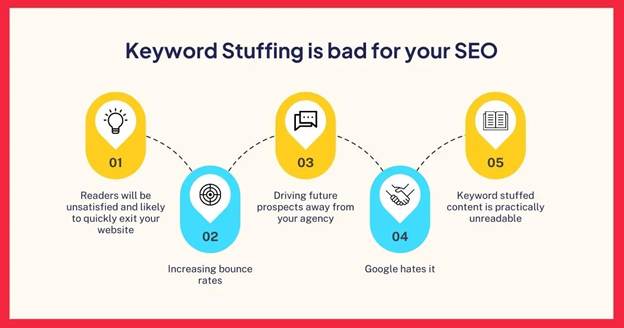
3. Overstuffing Your Content with Keywords
Keywords are essential for SEO and content. However, overstuffing the content with keywords does more harm than good. Many websites target wrong or irrelevant keywords. Avoid overstuffing your content with keywords.
At the same time, avoid using incorrect keywords. You may use keyword research tools to find keywords that align with what your target audience searches for. To overstuff content with keywords, many businesses also ignore search intent.
Search intent is one of the most critical ranking factors in 2026. Identify the information, transactional, and comparison intents. To avoid the ranking from going down, analyze the top-ranking pages for the target keyword. Check how these pages use keywords to match the intent. Establish a similar approach to align the content’s intent with the user’s intent.
4. Poor Reputation Management
Having a poor online reputation can be one of the worst things for your business. Around 88% of customers are likely to engage with or favour a business that responds to reviews. Whether it’s a positive or negative review, responding to it often helps build customer confidence.
Responding to reviews helps to build credibility. Responding to customer feedback is seen as good customer service. It helps build a reliable, active business. More than just replying to positive reviews, it is essential to reply to them.
If you do not have a protocol for replying to reviews yet, set one up immediately. Address negative customer reviews, acknowledge mistakes, and offer a resolution. Constant online reputation management helps to build credibility and win customer confidence. Eventually, this plays a key role in boosting rankings.
5. Ignoring Mobile and Page Speed Optimisation
Irrespective of how clean and functional your desktop website is, if the mobile version isn’t running, the rankings will fall. Since most people browse via their phones, optimising the website for mobile page speed is a mistake you shouldn’t avoid.
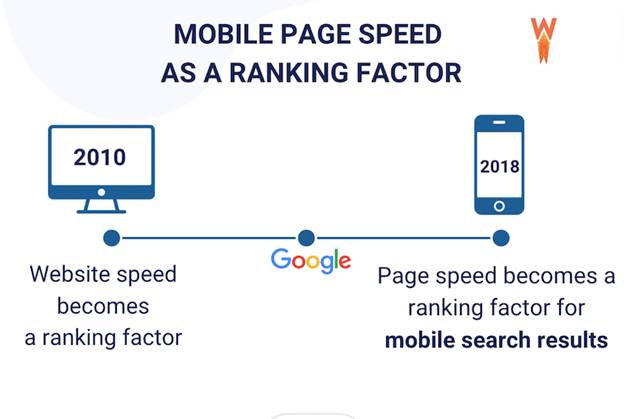
Optimising the page and mobile speed is more important for local SEO. Approximately 84% of the ‘near me’ searches happen on mobile devices. For local SEO, Google also prioritizes websites that are properly optimized for mobile loading.
The website should be easy to browse and navigate on mobile. Not only mobiles, but it should also be easy to navigate on other devices. Neglecting mobile optimisation of websites in 2026 means neglecting one of the key aspects of SEO. It’s a key factor that can help your website rank. Now, if you don’t take care of that, the rankings are likely to fall.
- Misalignment with AI-Driven Search Optimization
In the era of AI-driven search algorithms, traditional keyword stuffing or excessive on-page optimization signals can be interpreted as manipulative rather than authoritative. Modern search systems powered by machine learning models evaluate semantic relevance, contextual depth, entity relationships, and behavioral signals — not just keyword frequency.
AI-based ranking systems prioritize content that demonstrates clear intent alignment, topical authority, and structured information architecture. When content is over-optimized to target multiple search intents within a single page, it often leads to semantic dilution, reduced topical focus, and weaker entity salience. This negatively impacts content comprehension by search models.
Additionally, ambiguous intent reduces engagement metrics such as dwell time, click-through rate (CTR), and conversion rate — behavioral signals that AI systems increasingly use to refine rankings.
- Effective AI-driven optimization requires:
- Clear primary search intent mapping
- Strong topical clustering and entity consistency
- Structured data implementation
- Contextual internal linking
- Natural language optimization aligned with user queries
Without precise intent targeting and semantic clarity, content loses relevance signals, reducing both ranking potential and conversion performance.
Conclusion
As your business grows, you need to ensure everything is up to date. It is common to realize a few SEO mistakes you’ve made along the way. However, don’t let them be as they are. Even if you’re conducting trial-and-error tests, make sure to address the problem and fix it. Common SEO mistakes affect the quality of your website. Adopt sustainable SEO practices to drive content depth and relevance, data-driven decision-making, and technical precision. These could play an essential role in fixing the significant errors and help your website rank better.
