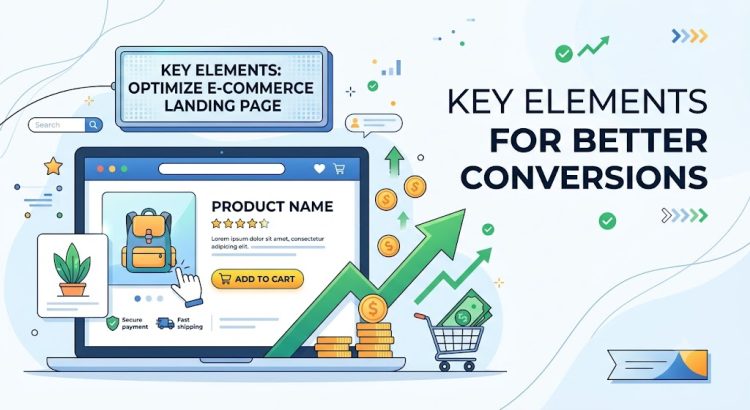
Key Elements that Optimize E-commerce Landing Page for Better Conversions

One of the main aspects of an e-commerce website is to get as many conversions down the hole as possible. At times, nudging customers into the conversion funnel is no less than a marketer’s nightmare. To counter this effectively, a good landing page can be a key conversion vehicle for your website. It gives the first impression about your business, while its main goal is to capture leads and generate sales.

Optimizing a landing page is all about organizing every vital element on it in order to maximize the percentage of visitors and complete your desired goal. Optimization, however, is easier said than done. It requires multiple testing to create a page as per user’ motivation, desires, and search queries.

What is a Landing page and why use E-commerce Landing Page?

Landing page is often the main destination of organic visitors as well as paid online marketing campaigns, which serves as a primary visual introduction for your company. Visitors can come to your landing page through many channels like Google search, social media, paid marketing, or any referral websites by clicking call-to-action buttons.

According to Hubspot, more landing pages means more opportunity of sales, conversions, and an improved ROI. Generally, e-commerce websites have a large number of pages so if you can create thousands of landing pages, then the likelihood of more sales and conversions will increase drastically.

Read More
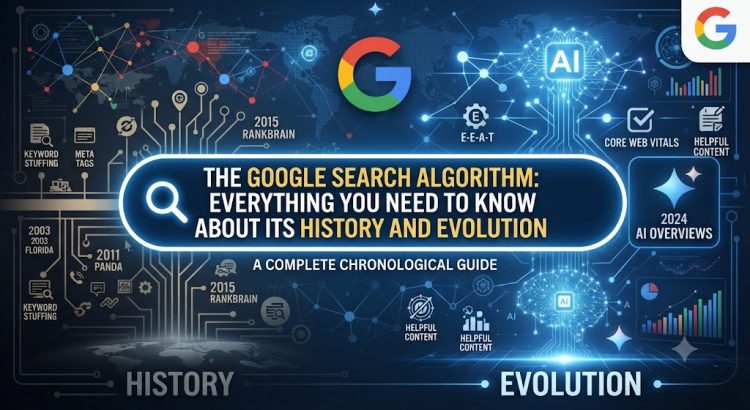
Google Search Algorithm Updates: Everything You Need to Know About Its History and Evolution

What is the Google search Engine?

A search engine is a program designed for users to find relevant information by typing keywords or search queries into search browsers.

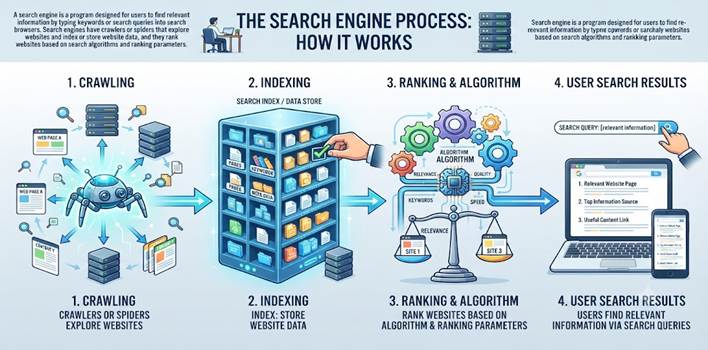
Search engines have crawlers or spiders that explore websites and index or store website data, and they rank websites based on search algorithms and ranking parameters. Here are few top search engines:

  • Google
  • Microsoft Bing
  • Yahoo
  • Baidu
  • Yandex

How Search Engine Works?

A search engine works through three main stages. Here they are:

  1. Crawling – In this stage, crawlers or spiders (automated search programs) visit websites to explore webpage content, links, website structure, and other information.
  2. Indexing – Once crawlers or spiders finish their job, the search engine organizes and stores the website data in a database; this process is called indexing.
  3. Ranking and Algorithm – An algorithm is designed with numerous parameters to rank a website in search results. Google’s ranking algorithm filters websites according to their metrics, and based on performance, the most suitable websites that meet the most parameters are ranked at the top.

Display – Finally, the user gets relevant information based on their search queries.

Read More

Local Citation Building: What It Is, Why It Matters, and the Best Business Listing Websites to Use

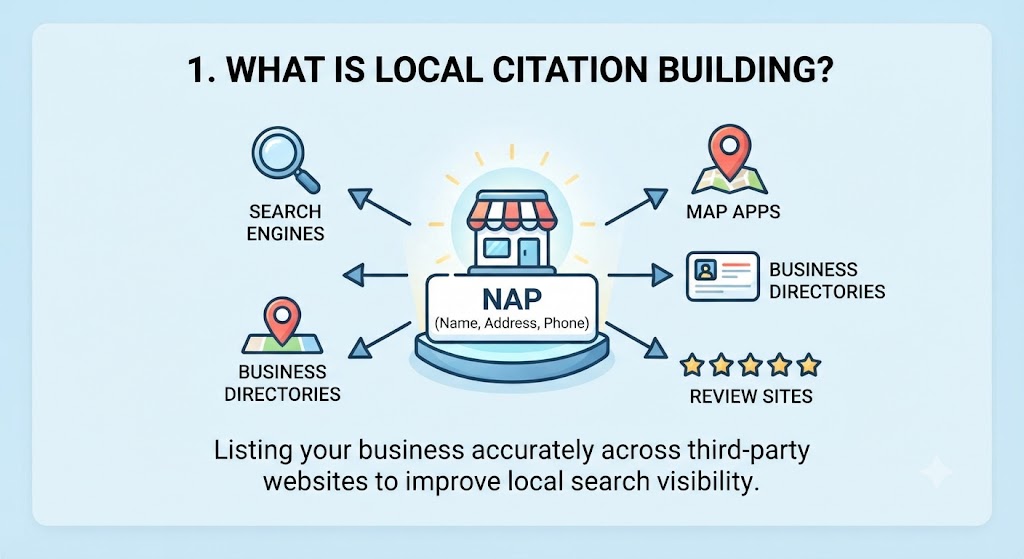
What is local citation building?

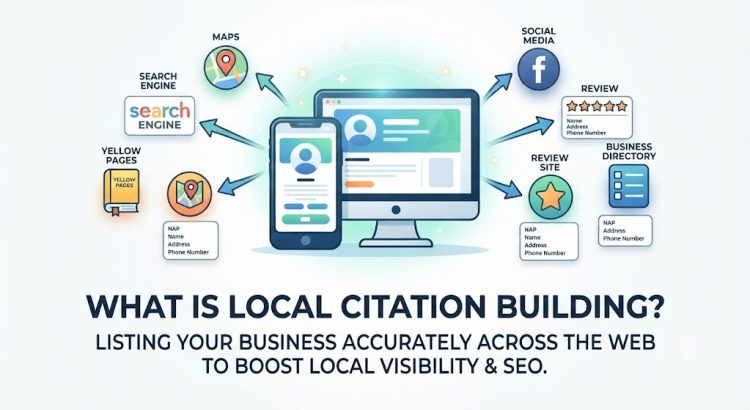
Local citation building/business listing is a local SEO marketing technique where a local business is listed on relevant third-party local business listing websites, search engines, apps, and review and rating websites with accurate information of NAP (name, address, and phone number). There are other business details that can be used for location citations, like a business description, business category, business keywords, contact email, website URL, and more.

Content-

What is local citation building?
Why You Need Citation Building?
What types of information are included in local listings?
How to Choose the Right Local Business Listing Pages and Review Sites?
Why Review and Citation building Are Crucial in Local Marketing?
The Impact of Local Listings and Reviews on Consumer Decision-Making
List of Local Business Listing Websites.
What is listings management?
Listing Management Vs Building Citations
Local Listing Management Tools

Why You Need Citation Building?

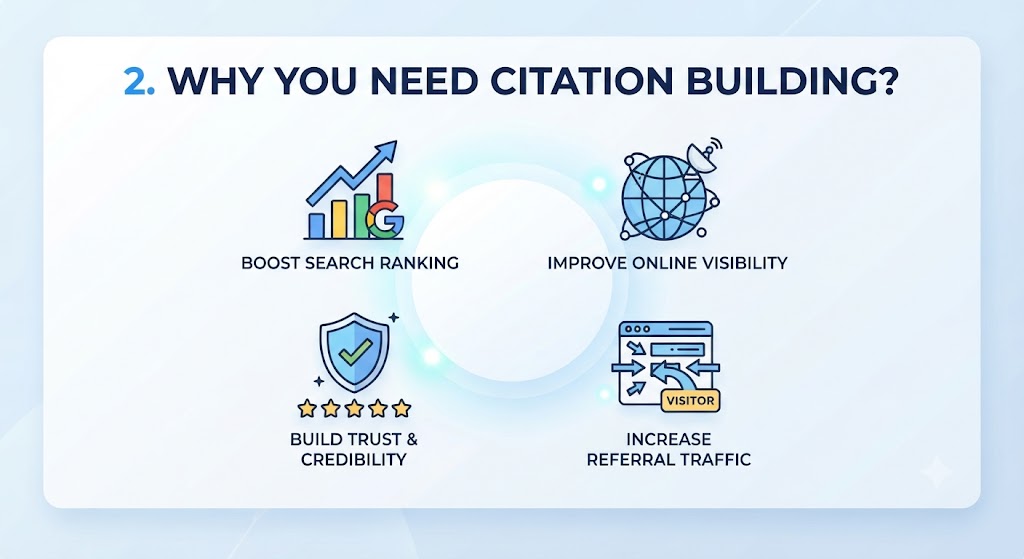
Local citation building with an accurate NAP for any online business is more important to improve local search performance on search engines on local search queries. Here are why online businesses need citation building:

Boost Search Ranking on Local Searches –

Search engines like Google use citations—such as a Google Business Profile—to verify online business details, including the location, business name, address, phone number, and more. Only verified business listings can be displayed or ranked on search engines. Listing your business on directory websites with consistent NAP information improves Google’s trust in your brand and helps your Google Business listing rank higher in search results.

Improve Online Visibility –

There are approximately 6.12 billion global internet users worldwide and some part of these users use third-party directories” (such as online business listings, yellow pages, map apps or specialized B2B/consumer directory platforms) for online business, listing businesses on local listing websites improve online business visibility.

Build Trust and Credibility –

Finding accurate business information—including NAP, user reviews, and ratings—on multiple business listing platforms builds customer trust, confidence and sends a positive signal, encouraging them to purchase your services or products.

Increase Referral Traffic –

Citation building websites do more than just improve SEO—they also drive referral traffic to your website. When users find and search for your business on local listing platforms, map apps, and review sites, positive feedback and accurate details improve your click-through rate, enhancing your business profile and generating valuable referral traffic.

Read More

Tips to Keep Your E-Commerce Sales Hot This Holiday Season

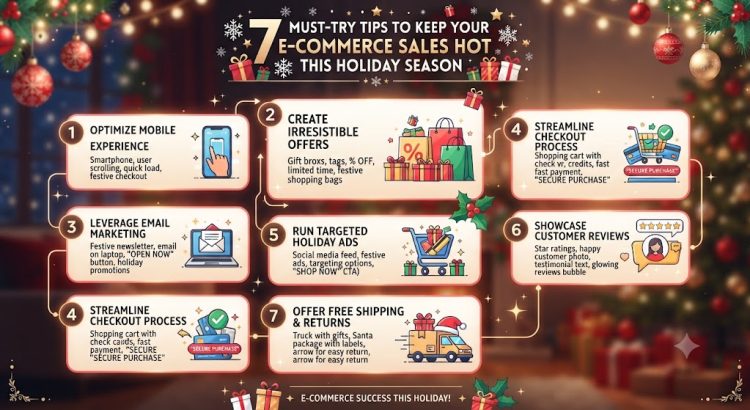
7 Must Try Tips to Keep Your E-Commerce Sales Hot This Holiday Season

The holiday countdown has just begun and as the festive mood gathers momentum, people start going on the shopping binge. The soaring number of people opting for online shopping in holidays is simply incredible. This is the great opportunity for e-commerce companies to boost their sales.

If you are eying for making most of this shopping season rage, you might as well get prepared to attract your prospects toward your online storefront. Make this season celebrations a win-win manifesto for you and your customers. However, the reality is you are not alone in this shopping carnival; your competitors must also be strategizing to take full advantage of this.  So how are you planning to increase your online sales?

Here are some great tips for you:

1: Make sure your site is ready with holiday theme

Your website and its landing page are very crucial points of contact with your customers. Give them the reason that you are equally excited about welcoming as well as serving them. Spruce up the look and feel of your store so that people take you seriously and that you mean business when it comes to advertising your products. Being in the same holiday spirit as your customers are will encourage them to shop with you. During holidays, customers expect that you have something unique and enchanting holiday collection products for them that can provide a good value for their money. You need to focus on visual design and aesthetics according to the coming festival, for example, Black Friday, Christmas, New Year. You can use small, simple festive elements with a campaign that can attract families.

Read More

How Email Marketing Can Drive E-commerce Sales and Revenue

As the owner of an e-commerce website, you have been told all about the plans you need to make for the New Year. How social media and targeted keywords and SEO would bring more customers to your store.

However, you would often find that the canniest of digital marketers have forgotten the most trusted tool in the arsenal – a tool that is free and promises excellent returns. No, we are not talking about magic but email marketing.

Email Marketing vs. Social Media: Why Email Drives Better E-Commerce Results

Emails have been around for so long that most have forgotten the era of snail mail. Sadly, we have also forgotten what a formidable method it is to get more visitors to your site and more leads.

Why is it essential, or how does it outperform something like social media? Imagine you have launched a new product and posted a glamorous new campaign about it on social media. But your campaign has to compete with a hundred other pages feeding their content on a customer’s Timeline.

Every hour hundreds of new posts are circulated – from friends, family, rivals, competitors, and so on. Your carefully made presentation on social media may not even be seen unless the customer had their app open at the exact minute.

But emails sit in the Inbox unless the user makes a conscious attempt to delete and send them to trash. Most people do not send unopened emails from businesses they know to trash without reading at least cursorily.

5 Proven Strategies to Boost Sales with Email Marketing

Craft Captivating Email Subject Lines

What strikes your eyes as soon as you log into your email? The subject line is always at the front and center. A suitable subject line can make or break your email marketing program. Of course, if it is irrelevant, it will be marked for trash, and the worst-case scenario is for it to be added to a spam list.

Read More