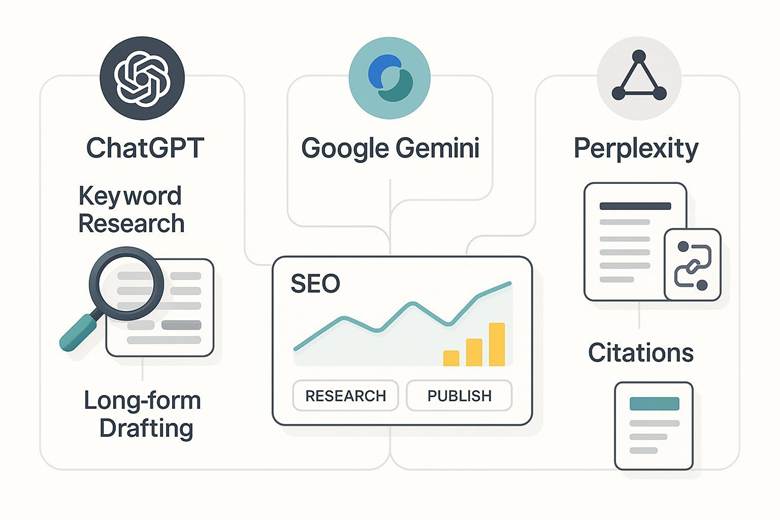
The internet search landscape is changing significantly. For years, professionals relied on SEO. With the coming in of AI tools, there’s been a massive shift. Roughly 20% of humanity uses AI tools for various purposes, with 500-600 million engagements per day. Amongst all, ChatGPT, Gemini, and Perplexity are the most commonly used AI tools.
With the growth of AI, SEO professionals are now turning to AEO or Answer Engine Optimization. Through AEO, you can tailor your web content to AI search engines. If you want your business to grow online today, it is important to tailor your content to AI engines. These help to boost searchability and visibility. Recent studies show that AI-powered search engines now handle 30% of online searches.
Let’s explore how to optimize content for these AI-powered engines.
What are AI Overviews?
Formerly known as Search Generative Experience (SGE), AI overviews are Google’s entry into generative AI, integrated into core search results. Google now just doesn’t provide links as answers to your queries, but a concise answer. An AI-generated summary appears at the top of the SERP as an answer to the user’s query.
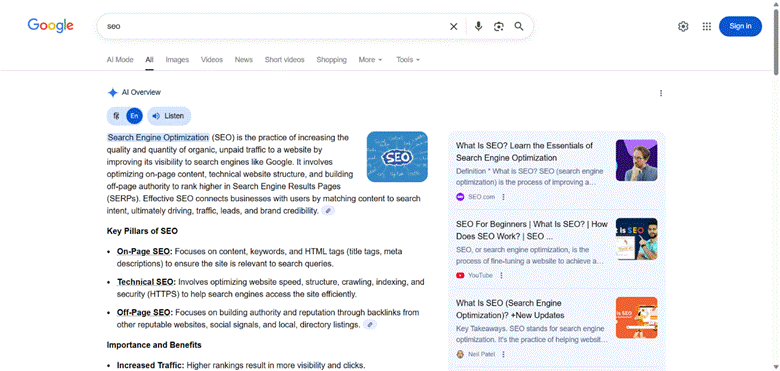
Botify’s AI Overviews study shows that AI overviews currently appear in around 47.4% of search queries. This is having a significant impact on how users interact with search. These AI overviews extract information from various sources, such as the web, and provide a direct citation for each. Businesses and content creators are no longer depending on ranking #1; they are focusing on staying relevant, per AEO.
How Do AI Search Engines Source Information?
ChatGPT values information from third-party sources. The content referenced by third-party platforms helps to increase the likelihood of inclusion in AI-generated responses. Similarly, Perplexity captures information from various credible sources. To create content for Perplexity, it is advisable to use short, direct answers. Furthermore, you can define an FAQ schema using JSON-LD for clarity.
Gemini, as a top AI platform, captures information from various sources, such as YouTube videos and Google Business Profiles. Integrate Knowledge Graph Links or the VideoObject schema to outperform key competitors. Linkflow.ai helped an enterprise mentorship achieve around 92% AI visibility compared to that of 55.3% for the next-best competitor. The platform tailored content for different customer profiles and drove engagement on YouTube for Gemini.
How to Optimize Content for Gemini, ChatGPT, and Perplexity?
Each of these AI platforms has a huge user base. Optimizing your content effectively can drive engagement. AI-optimized content tends to rank higher and increase engagement by 25%. Below are key ways to optimize content for these AI platforms and enhance visibility.
1. Use Conversational Structure
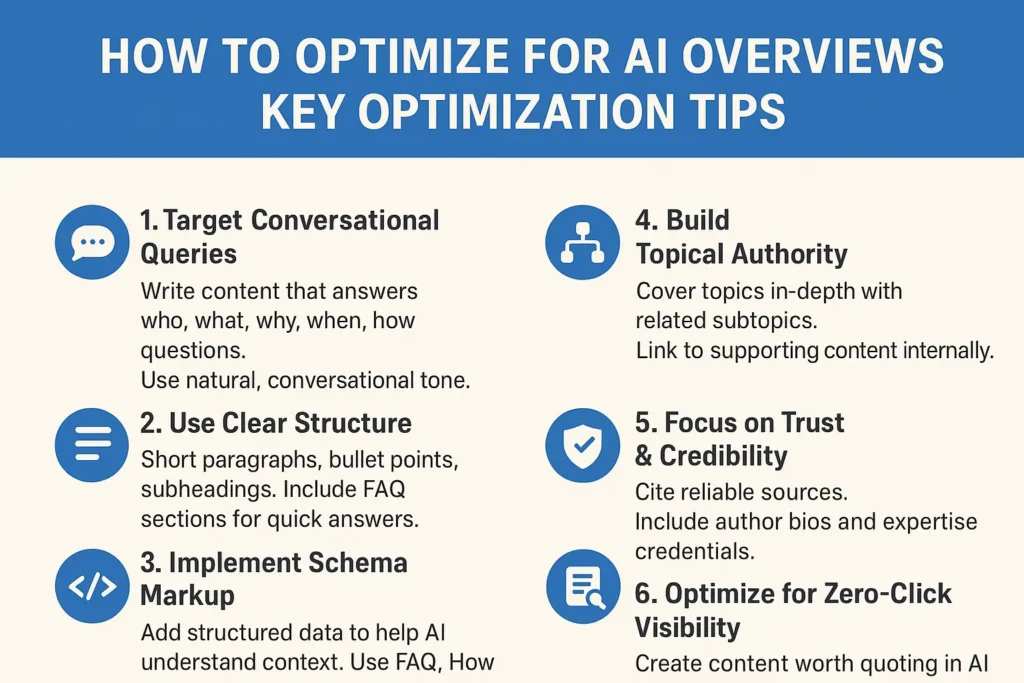
Write with a small, yet concise answer at the beginning of each section, not more than 50-100 words. This makes it easier for the AI platform to extract information. For your content headers, make sure to format them as natural-language questions. Properly formatted natural-language headers tend to perform better than regular ones.
None of your paragraphs should be extremely long. Integrate a central pillar page link that posts signals to the AI for a comprehensive understanding of the subject. When writing for your brand, it is important to include factual information. Ensure the extracted information is relevant to the brand.
2. Create In-depth and Authoritative Content
AI captures information from articles that offer a comprehensive coverage of the topic backed by credible data. It is advisable to integrate content with data-backed information from research-specific metrics to boost credibility. Research shows that content with concrete numbers is likely to perform 30-40% better through LLM citations.
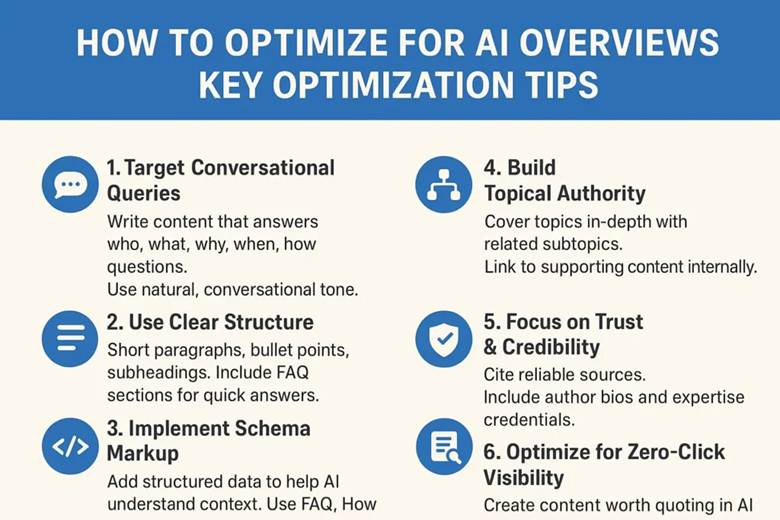
SaaS companies can leverage this approach to boost citations from AI search engines. Consistency is extremely important to optimize content for AI tools. Use accurate information and appropriate terminology throughout the content to avoid confusion and improve accuracy. Include author bio with credentials and links to boost the EEAT (Experience, Expertise, Authoritativeness, Trustworthiness) of the content.
Make sure to regularly update the content, at least every 3 to 6 months, to maintain freshness and relevance. Visitors referred to the website via AI-generated answers are 4.4 times more valuable than those from organic sources. These visitors are likely to spend more time on your website. It creates a strong foundation for fine-tuning the content.
3. Add Schema Markup and Metadata
Schema Markup and metadata are extremely important for businesses, especially for ranking in AI-powered search engines. Schema markup serves as a guide for machine readers. It helps AI identify the relevance and purpose of the content. When adding Schema Markup, use the relevant one to avoid confusion.
Here’s what schema to use for the different types of FAQs:
- HowTo Schema- instructional guides
- FAQpage Schema- question-based content
- Article Schema with date published/date modified- to highlight the freshness of the content.
After including the schema, it is important to validate the same using Google’s Rich Results Test. Longer articles (2000+ words) should have around 12-15 FAQ schema entries. Strengthen the relevance and credibility of your article by adding the organization or Author schema with the same as property linking. Instead of generic <div> tags, use <article>, <main>, and <aside> tags. These help in defining the structure and hierarchy of the content.
4. Implement Logical Prompting and Contextual Optimization
Use logical prompting patterns for structuring complex content. This allows the AI platforms to follow logical reasoning. Break down the big, complex topics into simple, clear, and sequential steps while driving connections between content ideas.
Provide comprehensive coverage for the use of complex, industry-specific terms. These AI models can derive information only when detailed information is given to them. Use interlocking strategies to increase topical authority. Establishing a relationship between content makes it simpler for AI tools to verify authority. This should help in improving ChatGPT’s ability to analyze the connection in the specific area.
Conclusion
AI-driven search has a significant impact on how people interact with search engines. It is important to optimize your content to adapt to the shift. The content should be more extractable than rankable. Apart from search tools, AI also depends on various sources and determines the effectiveness of the content. The tools verify content at a deeper, semantic level using structured information and different schemas. Thus, integrate all the key aspects for machines to process your content.