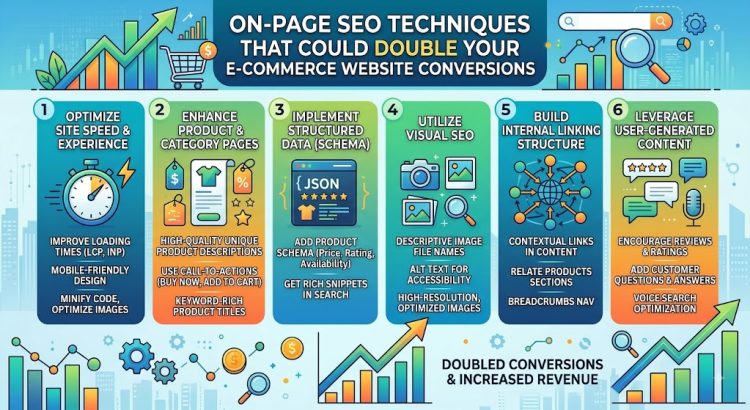
Improving traffic and optimization of e-commerce website is one of the most difficult task for online marketing experts. If we talk about the conversion, it’s really difficult to convert visitor to customer and improve conversion rate of website. Today we are going to share On-page SEO technique that can maximize organic search and conversion of e-commerce website.
To complement and update the article with modern strategies, here are essential modern On-Page SEO techniques tailored for e-commerce websites. Adding these to the existing list will address algorithmic shifts, search intent updates, and modern user expectations:
Optimize E-Commerce Website for Core Web Vitals & Page Experience
Search engines prioritize user experience metrics directly tied to loading speed and stability:
- Interaction to Next Paint (INP): Ensure interactive elements (like add-to-cart buttons, filter menus, and image zoom tools) respond instantly.
- Largest Contentful Paint (LCP): Optimize main product images using dynamic next-gen formats (
.webp,.avif) and set explicit dimension attributes to prevent layout shifts (CLS).
Implement Merchant Center & Product Structured Data (Extended Schema)
Beyond basic Product and AggregateRating schema, leverage rich structured data to secure visual Google Shopping snippets and AI overview inclusion:
- Add detailed properties:
shippingDetails,hasMerchantReturnPolicy,inStock,priceValidUntil, andgtin/mpn. - Use nested
OfferShippingDetailsandMerchantReturnPolicyschema to show free shipping or return policies directly in organic search snippets.
Voice Search & Search Intent Optimization
Optimize product titles and descriptions for natural-language, long-tail queries and conversational AI search engines:
- Include query-oriented phrases (e.g., “best budget waterproof running shoes for wide feet”).
- Add a collapsible Product FAQ section micro-data mapped with
FAQPageschema on major category and product pages.
Optimize High-Resolution Visuals & Visual Search (Google Lens)
Image-driven shopping and visual search play a huge role in product discovery:
- Rich Alt Text & File Names: Avoid generic names (
IMG_1024.jpg). Use descriptive names (e.g.,men-black-leather-biker-jacket-front.jpg) and contextual alt text. - Multiple Angle Images & 3D/AR Snippets: Include 3D models (
3DModelschema) or augmented reality previews so users can visualize products in their space, directly boosting conversions.
Smart Faceted Navigation & Canonicalization Management
E-commerce filtering systems generate thousands of thin, duplicate URLs:
- Use
AJAX/JavaScriptfor dynamic filtering without changing URLs for low-value attributes (like sorting by price or high-to-low). - Allow indexation only for high-search-volume filter combinations (e.g.,
/mens-shoes/nike/black/) while applyingnoindex, followor canonical tags to low-value combinations (e.g.,/mens-shoes?color=black&size=10&sort=asc).
User-Generated Content (UGC) & Video SEO Integration
Search algorithms favor authentic, user-backed content:
- Embedded Video Reviews: Include customer video reviews or product demo Shorts/Reels embedded directly on product pages with
VideoObjectschema. - Customer Q&A Section: Allow prospective buyers to ask questions on product pages. This dynamically adds fresh, long-tail keyphrase content to product pages automatically.
Strategic Internal Linking with Contextual Anchor Text
Avoid generic internal links like “click here” or automated product grids:
- Link related items inside product descriptions using descriptive, keyword-rich anchor text (e.g., “pairs perfectly with our lightweight denim jackets”).
- Build Breadcrumb Trail Schema (
BreadcrumbList) across all product and category sub-pages to reinforce site hierarchy for both users and web crawlers.
Dynamic Out-of-Stock Page Management
Handling expired or out-of-stock items properly prevents crawl budget waste and bounce-rate spikes:
- Temporarily Out-of-Stock: Keep the URL live, update schema availability to
OutOfStock, display clear restock dates, and offer an email alert signup form. - Permanently Discontinued Products: Implement 301 redirects to the closest parent category or updated product version instead of serving a 404 page.
Optimize Mobile-First Micro-Interactions
Since mobile accounts for the majority of e-commerce traffic:
- Sticky Add-to-Cart Bars: Ensure a seamless CTA remains accessible as users scroll through long product descriptions.
- Accordion Style Content Layouts: Keep mobile product pages scannable using expandable tabs for technical specs, shipping info, and sizing guides without cluttering the initial viewport.
AI-Optimized Product Descriptions & Search Overviews (AIO / GEO)
With AI-driven search overviews and chat engines becoming primary discovery channels:
- Write clear, factual “At a Glance” product bullet points near the top of the page (materials, dimensions, key use cases).
- AI search engines extract direct data points from unstructured text—concise summary sections help search bots digest and summarize product benefits accurately in AI search results.
Static and User-Friendly URL Structure
It is one of the tuff task to manage URLs for ecommerce website, as an E-commerce website have thousands of web pages and most developers create dynamic webpages for product and category based on the product id. Dynamic URLs are not easily to remember and difficult to index also search engines recommended using static URLs for the web pages. If we make static URLs for e-commerce website, we can include our main targeted keywords within the URLs and increase keyword relevance and keyword prominence, which will help web pages in search ranking.
Example – www.test.com/marketing.html is a good URL
www.test.com/marketing$adfk@asdf is a dynamic URL.
Define Product Pages and Category Pages URL Structure
Category and product pages URL should be defined earlier as per the requirement of tracking. Plan and think before what you want to track in Google analytics and how you can track them. Suppose if you want to track the individual category and its relevant product performance report then how will you manage and track the conversion? What URL structure will helpful for you? You need to make a proper directory structure for product and category pages; this will be depending upon your requirement.
Category Page URL –

Must Avoid Duplicate Product Page URLs
If you will not define proper directory structure for product pages then you can face the duplicate product page URLs issue because one or more products can display in multiple categories. It can be solved by implementing canonical tag on the product pages but it will be difficult to identify the list of products which are appearing in multiple categories, therefore it is most important to define a proper directory structure for the webpages.
Mobile-First and Responsive Website
As Google has fully implemented mobile-first indexing, it is critical to target mobile users. We must design our website to be responsive and highly performant on mobile devices, ensuring a seamless user experience across all screen sizes.
Keyword Analysis for Main Categories and Products
As keywords remain vital for business visibility, we should conduct detailed category, subcategory, and product-based keyword research and finalization. To capture specific user intent, we should prioritize long-tail keywords and natural language phrases.
Unique Meta Tags for All Webpages
Based on the selected keywords and user intent, we should create unique and compelling meta tags (titles and descriptions) for category, subcategory, and product pages. We can implement dynamic meta tags; whenever a new product is added to the website, the dynamic meta tags will automatically update on the product page following predefined templates.
Faceted Navigation, URLs, and Meta Tags
Products often have variations like color or size. If you do not properly define your product pages’ URLs or utilize canonical tags for these variations (often generated by faceted navigation), you risk duplicate content issues with meta titles and descriptions. Be careful while finalizing your faceted navigation, URL structure, and canonical strategy.
Product Description
Product descriptions should be clear, unique, and deeply informative for users, satisfying Google’s E-E-A-T guidelines. Describe product details naturally; write as though you are personally selling the product, making the description attractive and highlighting how the features benefit the customer. Avoid thin content by including specifications, use cases, and helpful guides.
Use Schema Structured Data for E-commerce Website
Implementing comprehensive Schema structured data (such as Product, Offer, and Review schemas) helps search engines understand the webpage content. This enables highly visible information to appear directly in search results via rich snippets, including price, product name, availability, ratings, and reviews.
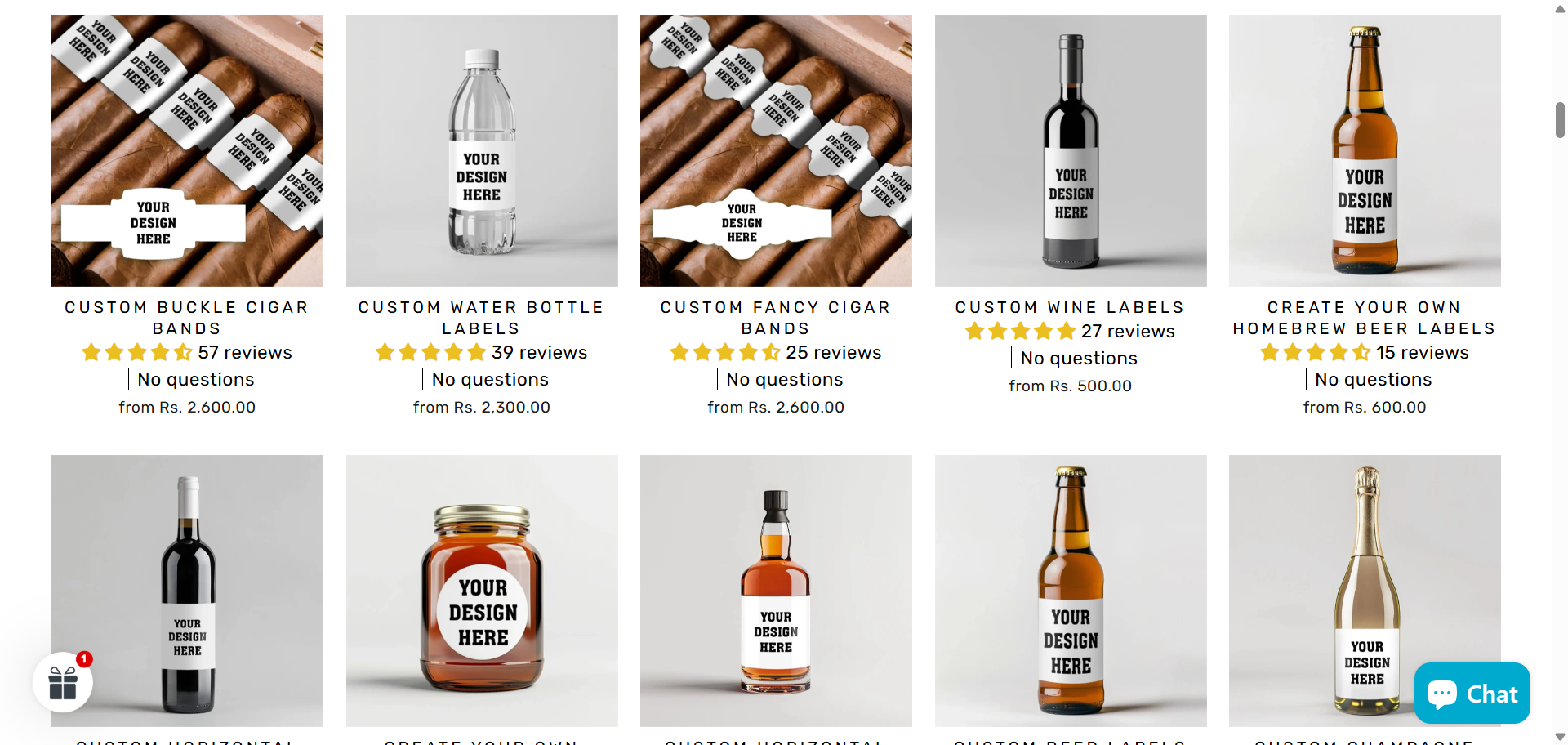
For example, this custom labels page is filled with customer reviews and ratings to build buyer trust and drive purchasing decisions. They use Schema markup across both collection and product pages. All reviews and ratings must be authentic; never use fake reviews or inflated ratings to trick search engines or users.
H1 Tag – A single H1 tag should be included on every page of the website, especially on product pages. Using the exact product name as the H1 tag is the most effective and straightforward approach.
User-Friendly Navigation
Navigation should be intuitive and seamless. Important category pages should link directly from the homepage, while subcategory pages link naturally from main categories. Products should be nested logically under their respective categories or subcategories. If a product appears in multiple categories, maintain a single canonical URL or implement a canonical tag pointing to the primary product page to avoid duplicate URL issues.
Content Interlinking to Improve Engagement
Adding contextual internal links within your content helps distribute page authority and improves user engagement. Linking to relevant internal pages strengthens your overall site architecture, directs organic traffic to key products, and lowers bounce rates.
Remove Duplicate and Low-Quality Content
Duplicate, thin, or low-quality content negatively impacts search rankings. Modern search algorithms consistently demote pages that lack value. Avoid manufacturer copy-pasting; instead, write unique, informative, and compelling descriptions for every product.
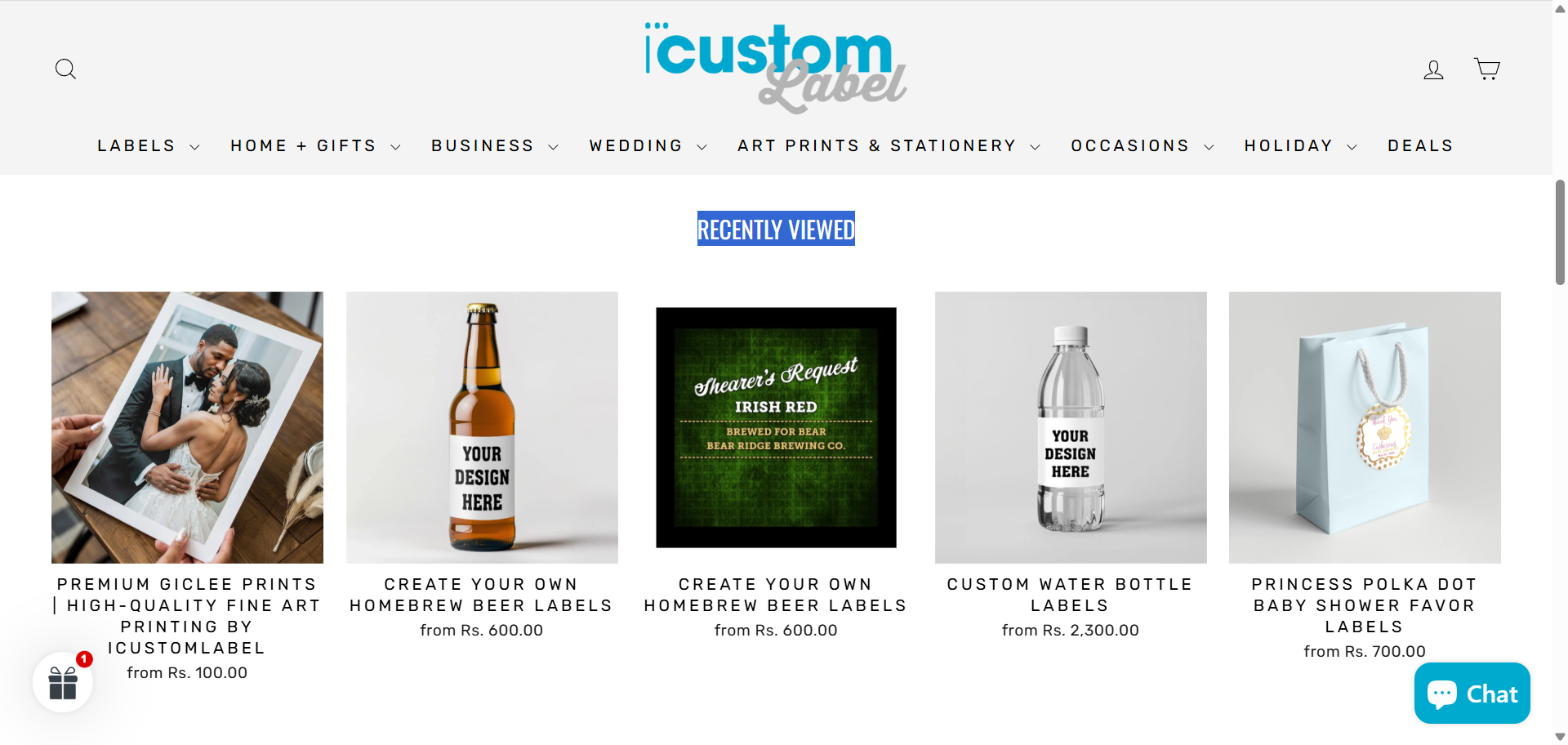
Related Products / Recently Viewed / Popular Products
To enhance product visibility and user retention, include a “Related Products” or “Recently Viewed” block below the main product details. This keeps visitors engaged longer, increases pages per session, and helps drive cross-sell conversions.
Review and Comment Option
People love to read reviews and comments before buying any product online; therefore, we must include a review and comment section on all product pages.
Pagination Handling
Although Google no longer uses rel="next" and rel="prev" as ranking signals, maintaining clean internal pagination links (e.g., 1, 2, 3) and self-referencing canonical tags helps search crawlers easily navigate multi-page product listings.
Use Call to Action Words
Include clear call-to-action (CTA) phrases within your content—such as a phone number, “Book Now,” or “Buy Now.” These prompt visitors to engage with your site and guide them on exact next steps.
Use Call to Action Words in Meta Tags
To boost click-through rates (CTR) from search results, include compelling CTA phrases in your meta titles and descriptions (e.g., “Get 30% Off,” “Up to 50% Off,” “Special Offers,” or “Save Today”).
SSL Certificate Implementation
Google prioritizes HTTPS-secured websites in search rankings. Implementing an SSL certificate is crucial for e-commerce sites to build visitor trust, as security concerns often prevent shoppers from making online purchases.
Image Optimization
Search engine crawlers cannot read image context without alternative text. Include relevant, descriptive alt tags on every image while optimizing file sizes to keep page load times fast.
Canonical Tag Implementation
E-commerce sites frequently generate dynamic or duplicate URLs. Implementing canonical tags across product pages is essential to resolve duplicate content issues and consolidate ranking authority.
Breadcrumb Navigation on E-commerce Category and Collection Pages
Breadcrumb navigation helps search engines understand site hierarchy while allowing shoppers to identify their location on the site and navigate back to parent categories easily.
Upload Product Videos on E-commerce Website
Including short product overview or demo videos on product pages increases dwell time, lowers bounce rates, and directly improves overall conversion rates.
Avoid Intrusive Pop-ups
Avoid displaying aggressive or full-screen pop-ups upon arrival. They frustrate users, degrade the mobile browsing experience, and harm conversion rates.
Page Load Speed
Site speed is a key ranking signal in Google’s search algorithms. Fast loading times improve user experience and help crawlers index pages efficiently. Minify CSS, JavaScript, and HTML, optimize images, and use tools like Google PageSpeed Insights to test performance.
Hosting Server Location and Infrastructure
Web hosting performance and server proximity impact page loading times. Utilizing reliable cloud hosting—where infrastructure is distributed across interconnected servers—reduces load times and prevents unexpected downtime.
Shipping Information
Keep product shipping details transparent. Displaying terms, delivery timelines, and shipping charges directly on the product page reduces buyer hesitation and checkout drop-offs.
XML Sitemap
An XML sitemap helps search engines discover and index pages efficiently. Maintain a dynamic XML sitemap and submit it via Google Search Console to handle frequently changing inventory.
Block Unwanted and Cart Pages
Use the robots.txt file to block search bots from crawling low-value or administrative pages, such as user carts, checkout sequences, and account areas, to conserve crawl budget.
Deal with 404 and Server Errors
Regularly audit your site to identify and resolve broken links, 500 server errors, soft 404s, and dead pages to protect user experience and preserve link equity.
Local Address in the Footer
If your online store serves a specific geographic location, include your local business address and phone number in the website footer to strengthen local SEO and trust signals.
Easy Payment Process
While payment workflow is primarily a user experience factor, a simple, hassle-free checkout prevents buyer hesitation and shopping cart abandonment. Ensure checkout options are seamless and accessible.
Include an Offer or Discount Section
Convert browsing visitors into customers by creating a dedicated deals section that consolidates all discounted and clearance products in one central location.
Managing Out-of-Stock Products
Avoid deleting out-of-stock product pages. Keep the URL live, mark the status as “Out of Stock,” update the schema availability to OutOfStock, and offer restock notification signups instead of using obsolete meta expiry tags.
Social Sharing Buttons on Product Pages
Improve brand exposure and drive organic social traffic by placing convenient social sharing icons directly on product pages.
Customer Support Options
Display support channels—such as email addresses, phone numbers, and live chat options—prominently on the site to reassure buyers and handle pre-purchase questions.
FAQ and Terms & Conditions Pages
Maintain comprehensive FAQ, Privacy Policy, and Terms & Conditions pages to answer common questions regarding returns, warranties, and order processing before buyers checkout.
Custom 404 Page
Create a custom, user-friendly 404 error page that returns a proper 404 HTTP header code. Align it with your site design and include search tools or key category links so lost visitors can navigate back to active pages.
E-commerce Tracking Script Implementation
Set up e-commerce analytics tracking (such as Google Analytics 4) to monitor product engagement, conversion paths, and sales performance across traffic sources.
