How to Improve E-Commerce Shopping Customer Experience

One big reason behind the success of ecommerce giant Amazon is – the experience they offer their consumers. If you are planning or struggling to establish a name in the ecommerce industry, you must fill the loopholes in your customer service process.

You need to put in efforts to uplift customer experience on your website and with your business. If your customers do not feel good while shopping on your website, they would not buy from you. And if they have already bought, chances are they will either cancel their order or never come to buy from you again.

No matter how effective your SEO has been at bringing new traffic to your website, if your website does not provide visitors with a sense of security and a powerful load of convenience – it will lack on the revenue part, because they would not prefer buying from you.

All your efforts to build a strong online presence for your ecommerce setup sink down when you fail to please your visitors and customers.

What Exactly does the Term Customer Experience Involve?

Customer experience is a broad term. It is often described as the practice of designing and reacting to meet and exceed the expectations, leading to greater customer satisfaction and loyalty.

Read More

How Email Marketing Can Drive E-commerce Sales and Revenue

As the owner of an e-commerce website, you have been told all about the plans you need to make for the New Year. How social media and targeted keywords and SEO would bring more customers to your store.

However, you would often find that the canniest of digital marketers have forgotten the most trusted tool in the arsenal – a tool that is free and promises excellent returns. No, we are not talking about magic but email marketing.

Email Marketing vs. Social Media: Why Email Drives Better E-Commerce Results

Emails have been around for so long that most have forgotten the era of snail mail. Sadly, we have also forgotten what a formidable method it is to get more visitors to your site and more leads.

Why is it essential, or how does it outperform something like social media? Imagine you have launched a new product and posted a glamorous new campaign about it on social media. But your campaign has to compete with a hundred other pages feeding their content on a customer’s Timeline.

Every hour hundreds of new posts are circulated – from friends, family, rivals, competitors, and so on. Your carefully made presentation on social media may not even be seen unless the customer had their app open at the exact minute.

But emails sit in the Inbox unless the user makes a conscious attempt to delete and send them to trash. Most people do not send unopened emails from businesses they know to trash without reading at least cursorily.

5 Proven Strategies to Boost Sales with Email Marketing

Craft Captivating Email Subject Lines

What strikes your eyes as soon as you log into your email? The subject line is always at the front and center. A suitable subject line can make or break your email marketing program. Of course, if it is irrelevant, it will be marked for trash, and the worst-case scenario is for it to be added to a spam list.

Read More

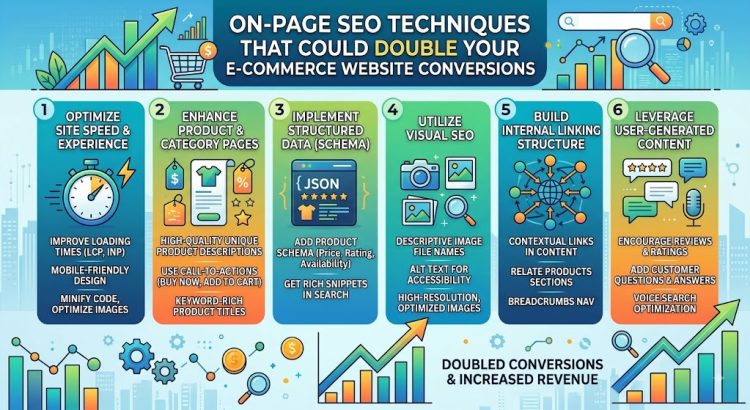
On Page SEO Techniques That Could Double Your E-commerce Website conversions

Improving traffic and optimization of e-commerce website is one of the most difficult task for online marketing experts. If we talk about the conversion, it’s really difficult to convert visitor to customer and improve conversion rate of website. Today we are going to share On-page SEO technique that can maximize organic search and conversion of e-commerce website.

To complement and update the article with modern strategies, here are essential modern On-Page SEO techniques tailored for e-commerce websites. Adding these to the existing list will address algorithmic shifts, search intent updates, and modern user expectations:

Optimize E-Commerce Website for Core Web Vitals & Page Experience

Search engines prioritize user experience metrics directly tied to loading speed and stability:

  • Interaction to Next Paint (INP): Ensure interactive elements (like add-to-cart buttons, filter menus, and image zoom tools) respond instantly.
  • Largest Contentful Paint (LCP): Optimize main product images using dynamic next-gen formats (.webp, .avif) and set explicit dimension attributes to prevent layout shifts (CLS).

Implement Merchant Center & Product Structured Data (Extended Schema)

Beyond basic Product and AggregateRating schema, leverage rich structured data to secure visual Google Shopping snippets and AI overview inclusion:

  • Add detailed properties: shippingDetails, hasMerchantReturnPolicy, inStock, priceValidUntil, and gtin/mpn.
  • Use nested OfferShippingDetails and MerchantReturnPolicy schema to show free shipping or return policies directly in organic search snippets.
Read More

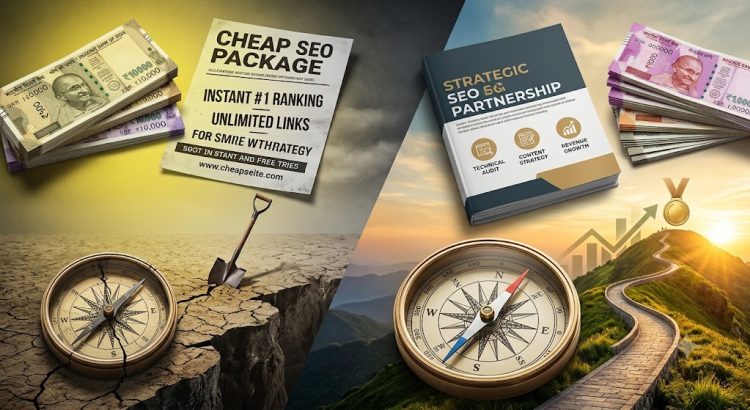
The Hidden Costs of Cheap SEO: Why a ₹10,000 Package Will Destroy Your Google Rankings

Every day, business owners receive emails that sound almost too good to pass up:

“Rank #1 on Google in 30 Days! Full SEO Service for only ₹9,999/month. Includes 50 backlinks, 10 articles, and keyword optimization!”

For a small business or startup watching its budget, ₹10,000 (~$120) a month feels like a low-risk experiment. But in modern search engine optimization, cheap SEO isn’t just ineffective—it is an expensive liability.

Google’s ranking algorithms—powered by AI systems like SpamBrain and strict Helpful Content guidelines—are designed to identify and penalize low-quality, manipulative tactics. What seems like a bargain today can leave your website penalized, de-indexed, or permanently damaged tomorrow.

What Cheap SEO Agencies Actually Do (And Why It Kills Rankings)

To deliver on impossible promises for a fraction of the cost, budget agencies rely on shortcuts that directly violate Google’s Search Essentials.

Read More

Keyword Cannibalization: Common Mistakes and How to Fix Them to Boost Your Rankings

Many SEO experts or companies suggest creating multiple webpages to target the same keywords. However, this approach can harm your website’s rankings on Google, as targeting multiple pages for the same keywords is not a recommended practice.

This technique puts Google Search in a dilemma when trying to determine which page is the most relevant for a query. Let us help you understand what keyword cannibalization is and how to fix it to prevent Google penalties.

What is keyword cannibalization?

In simple terms, creating and targeting multiple pages on your website for similar keywords is called keyword cannibalization. In such cases, Google can become confused about which page should rank for a given query. While one page with the most relevant content may rank higher, others are pushed down, creating internal competition among your webpages in search results.

For an example,

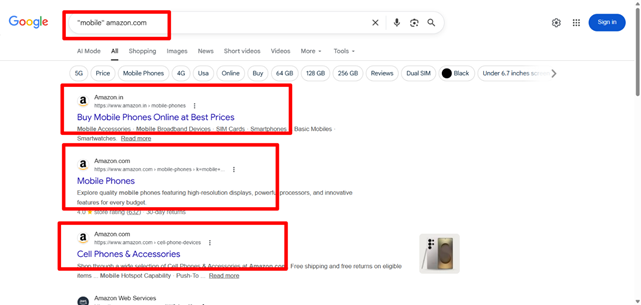
Let’s take Amazon mobile product pages as an example. On an e-commerce website, multiple URLs are often created through filters and other search parameters. This can result in several pages targeting the same products with very similar content.

If you search on Google using the query below, you’ll notice that multiple pages from the same website may rank for the same search term.

This isn’t limited to e-commerce websites. Many companies create similar static pages for the same services and target them with nearly identical metadata. This can lead to a keyword cannibalization issue. One of the most common examples is targeting the same keywords on both the website homepage and a service page.

Read More