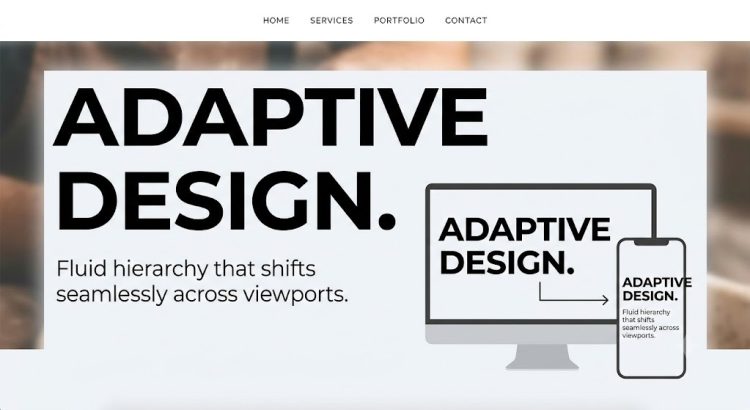
Responsive design, mobile readiness, and flat UI aesthetics have evolved from modern novelties into baseline web standards. However, creating a functional layout is no longer enough to keep visitors engaged—or to satisfy search engine algorithms.
Psychological research shows that users form an opinion about a website’s visual appeal in as little as 50 milliseconds (0.05 seconds), with 94% of initial impressions directly tied to design and layout. Furthermore, data from Google and Deloitte reveals that improving site responsiveness by just 0.1 seconds increases conversion rates by over 8%.
To capture attention within this narrow window, modern web architecture relies on specific technologies:
- Google Core Web Vitals: Standards measuring LCP (Largest Contentful Paint for loading), INP (Interaction to Next Paint for responsiveness), and CLS (Cumulative Layout Shift for visual stability).
- Next-Gen Media Engines: Leveraging lightweight AVIF/WebP image formats and vector graphics to deliver high-resolution visual storytelling without sacrificing performance.
- Hardware-Accelerated UI: Utilizing lightweight CSS transitions instead of heavy JavaScript threads to keep user interactions smooth and low-latency.
When executed together, these technical and visual patterns turn passive browsing into an engaging, high-performing digital experience.
Read More