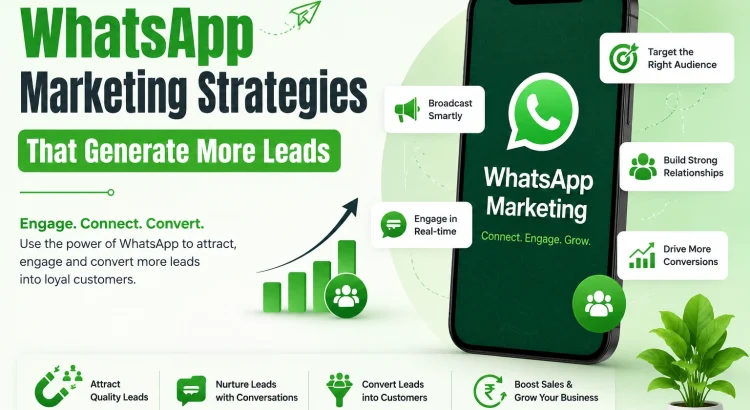
WhatsApp lead generation is one of the quickest ways to connect with customers, cut the response time, and get more conversions. Most businesses are always on the lookout to connect with potential clients.
WhatsApp has a huge user base and, as an interactive platform, can offer a lot of scope for your business. It is a proven platform through which you can grab attention and deliver significant results.
Check out WhatsApp automation tools for your e-commerce business.
This article covers the different WhatsApp lead generation strategies that can work well for businesses.
Why Does WhatsApp Lead Generation Matter?
Capturing and qualifying leads by just chatting can help to drive a significant impact on results. You don’t have to do it the old-fashioned way, but adopt the latest approach.
Here’s why lead generation through WhatsApp works for businesses:
- Better Completions: WhatsApp has a high open rate of around 98% and a click-through rate of around 45-60%, outperforming email or SMS. Therefore, fewer people are likely to drop-off.
- Improved Engagement: WhatsApp has a casual and informal setting, which ensures more people feel comfortable. This eventually helps in increasing engagement and driving customer satisfaction.
- Faster response from leads: Personal, real-time messaging helps in speeding up the conversations. As leads get responses sooner, they’re satisfied, and answers can be provided accordingly.
Top WhatsApp Lead Generation Strategies for Businesses
From organic to paid strategies, everything works well for WhatsApp when integrated the right way. Below are some of the top WhatsApp lead generation strategies for businesses:
1. Whatsapp QR Codes on Physical Materials
One of the easiest ways to bridge the physical and digital gap is just to have QR codes. Integrate a QR code that opens the WhatsApp conversation across various materials like banners, business cards, store windows, and more.
When building this QR, ensure that it has a pre-filled message so your business can track the source of the lead. An instant context is extremely crucial to ensure that the teams can action the leads immediately.
How to Create Your WhatsApp Link
The first step is to convert your WhatsApp number into a direct Click-to-Chat link. This allows customers to start a conversation with your business without manually saving your phone number.
- Use the format: https://wa.me/yourphonenumber
- Include your country code, but remove the “+” symbol and any leading zeros.
- For example, a number like +1 234 567 8900 would become: https://wa.me/12345678900
You can also create a pre-filled message to make it easier for customers to start the conversation.
- Example: https://wa.me/12345678900?text=Hello%20I%20would%20like%20more%20information
- Replace spaces with %20 to ensure the message works correctly.
Generate a Whatsapp QR Code
Once your WhatsApp link is ready, paste it into a QR code generator to create a scannable code. When users scan the code with their smartphone camera, WhatsApp will automatically open a chat with your business.
To improve WhatsApp engagement:
- Add a WhatsApp logo in the center of the QR code for better recognition.
- Choose a high-resolution format such as PNG or SVG for printing.
- Consider using a dynamic QR code if you want to update the destination link later or monitor scan performance.
Place the QR Code Where Customers Can See It
After downloading your QR code, place it on marketing materials where potential customers are likely to notice it.
Business Cards
- Add the QR code to the back of your card.
- Include a call-to-action such as “Scan to Chat with Us on WhatsApp.”
2. Click-to-WhatsApp Ads
Click-to-WhatsApp Ads have brought a significant change in WhatsApp lead generation over the years. The logic is simple: you run an ad on Instagram and Facebook, but instead of the lead being redirected to the landing page, they’re redirected to a WhatsApp conversation.
There’s no need to fill out a form, but instant chatting. Since the user is already on WhatsApp, they’ve sort of committed to the business. They’re not just a cold lead anymore.
Integrating CTWA the right way can help to deliver 3-5x better results than the traditional Facebook Ads Manager. This strategy works best for markets such as the Middle East, Southeast Asia, Brazil, and India.
3. WhatsApp Broadcasts
Businesses need a proper system for the lead to be nurtured towards conversion. That’s where WhatsApp broadcasts help businesses. Through WhatsApp broadcasts, you can send messages to multiple contacts and also receive a personal message.
Having a personalized format of messaging can help to drive higher engagement as compared to email newsletters. Set up the automated broadcast and observe how it performs. Conduct a case study for lead nurturing, through which you inform your customers about the products.
Creating a sequenced lead nurturing session helps to drive the leads effectively. Moreover, it converts at a higher and better rate than just looking obsolete. Be careful with how you broadcast. Build the broadcast list only with consent. If any violations are noticed, WhatsApp will restrict or ban the account. This will further prevent the business from growing effectively.
4. Use Interactive Chats
One of the best ways to qualify leads is to use interactive chats. People don’t want to download long PDFs today. Lead interaction shouldn’t feel like a one-way exchange, but rather one where they feel helped. WhatsApp Flows is a significant shift in today’s time.
Although WhatsApp Flows has a small interface within the chat, users have the flexibility to browse products, choose options, and even book their items. This gives them the flexibility to do everything on WhatsApp without having to leave the platform.
To interact with the leads and make it easier for them, it is best to send a single message where they can scroll through the products rather than sending individual photos. Service-providing businesses should integrate features that allow customers to book a demo and service from the platform itself. A simple yet effective approach to collecting from leads and responding with something that aligns with the audience more.
5. Sell within the Conversation
Bridge the gap between chatting and purchasing. No customer wants to stay on a website that is slow, especially when they want to complete a purchase. Through WhatsApp, businesses should start selling in the same chat where the discussion begins.
Once the customer is in the chat, ensure that you have your catalog ready. Always update the catalog as per the latest information. If the customer asks to view the product, just send them the catalog. Ensure that the information is segregated and the product details are available, one by one.
Integrating social ads that open with the chat tends to perform better. Guide the viewers directly into the chat so that the query window is shortened. Communicate with the customers and close the deal. Offer simple payment using a secure UPI link that the customers can access from anywhere.
6. Write Follow-up Messages
Follow-up messages are a simple yet effective lead-generation strategy on WhatsApp. While the first message sets the path for conversation, it’s the follow-up messages that drive interaction and retain the lead.
Whenever you’re writing follow-up messages, ensure that there’s a sequence to them. It should feel supportive and not pushy. You aim to make a sale and convert your lead.
Businesses should also offer an option to customers where they can stop receiving the messages. It makes the customers feel valued and keeps the conversation going. If they’re interested, they would surely do business with you. However, keep track of the lead and send follow-up messages as gentle reminders.
Conclusion
WhatsApp has grown beyond the regular messaging app. Businesses can leverage this platform to attract potential customers. If used the right way, it can be a great channel to convert customers. Start conversations with your customers that feel more natural. Focus on interactions rather than an aggressive sales push to build up long-lasting reach and get consistent leads from the platform.
